
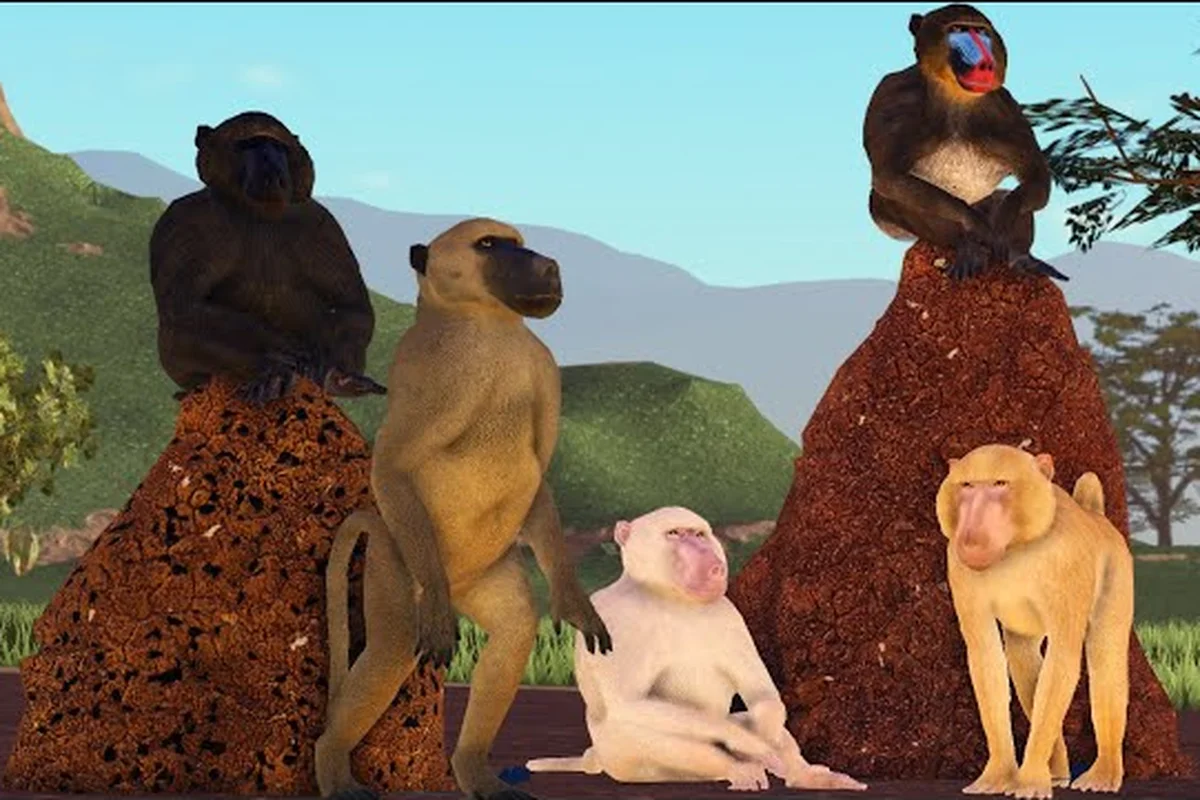
Picking your first animal in Savannah Life sets the tone for dozens of hours on the Roblox savannah, and the baboon is one of the cheapest, most chaotic picks on the roster. Troop mechanics, climbing, and raid-kill theft make the baboon a fascinating starter for players who want fast-paced, social gameplay rather than a slow solo grind. This guide breaks down the baboon's cost, stats, skills, and ideal player profile so you can decide whether the Savannah Life baboon deserves a slot in your early-game lineup.
Savannah Life Baboon Overview and Cost
The baboon occupies a middle-of-the-pack price tier in the animal roster, sitting alongside other agile picks like the ostrich and the cheetah. According to the official Savannah Life game page, baboons are grouped with mid-cost animals that trade raw bulk for speed, climbing access, and a uniquely social playstyle centered on troop raids. That positioning is intentional: the developer, NOYO Productions, has tuned the baboon as an entry point for players who enjoy group chaos over lone-wolf survival.
Price and Unlock Requirements
| Animal | Approximate Price Tier | Playstyle Focus | Group Behavior |
|---|---|---|---|
| Porcupine | Low | Defensive, passive | Solitary |
| Flamingo | Low | Wading, aquatic edges | Loose flocks |
| Baboon | Mid | Agility, climbing, raiding | Strong troops |
| Ostrich | Mid | Speed, kick attacks | Small groups |
| Cheetah | Mid-High | Burst speed, solo hunter | Lone predator |
| Wildebeest | High | Herd migration, bulk | Massive herds |
Why the Baboon Fits a Mid-Tier Budget
The mid-cost positioning lets the baboon act as a stepping stone between cheap, low-risk animals and expensive apex picks. Players who outgrow the porcupine's defensive playstyle often jump to the baboon for its offensive flexibility, without paying the premium demanded by the cheetah or the vulture. In practice, the baboon is a "first offensive upgrade" that introduces real combat mechanics without locking players out of social gameplay.
Baboon Skills, Stats, and Troop Mechanics
The baboon's identity is built around three pillars: climbing, troop raiding, and food theft. The official Savannah Life description frames baboons as creatures that "live in troops, climb woodland and rocks, and bully smaller animals with quick attacks," which aligns with the real-life chacma baboon's opportunistic foraging behavior. In-game, that translates into a kit optimized for ambushes, escape routes, and pack synergy.
Core Skill Breakdown
The baboon's skill set leans into agility over raw power. While the wildebeest leans on herd bulk and the vulture leans on aerial scouting, the baboon's toolkit rewards players who think in terms of verticality and group coordination. According to community data summarized on the Savannah Life wiki, the baboon's combat profile is built for hit-and-run rather than sustained melee.
| Skill Category | Primary Use | Best Against | Weak Against |
|---|---|---|---|
| Climb | Reach rocks and trees | Ground-only predators | Aerial threats |
| Quick Strike | Burst damage on small prey | Porcupine, flamingo, juvenile animals | Adult wildebeest, cheetah |
| Raid Call | Summon troop to a kill | Lone hunters | Coordinated packs |
| Food Theft | Steal from carcasses | Distracted players | Alert groups |
Troop and Pack Synergy
What separates the baboon from other mid-cost picks is its troop raid mechanic, where baboons coordinate to overwhelm larger animals and steal food from distracted players. The community wiki notes that baboon troops commonly raid kills and steal food from lone hunters, which makes the baboon one of the most social mid-tier picks on the roster. A baboon playing solo can climb rocks to scout or escape, but a baboon playing in a troop unlocks the kit's full potential: synchronized strikes, shared intimidation, and group theft.
-
Solo play: Use climbing to access high-ground resources, and lean on quick strikes against smaller animals.
-
Troop play: Group up with three to five other baboons to raid large kills and run off apex predators through sheer numbers.
-
Mixed play: Pair with a vulture for aerial recon and a porcupine for early-warning defense, creating a versatile coalition.
Comparing the Baboon to Other Mid-Tier Picks
The baboon is rarely the only option at its price tier, and understanding the trade-offs helps players make a confident first pick. Each of the baboon's neighbors on the animal roster — the ostrich, flamingo, vulture, porcupine, and wildebeest — offers a different answer to the same question: how do you want to spend your early-game hours? Below is a side-by-side comparison to anchor those decisions in concrete mechanics rather than vibes.
Baboon vs. Ostrich, Flamingo, and Vulture
The ostrich matches the baboon's mid-tier price but trades climbing for raw sprint speed and a powerful kick. Players who prefer open-grassland chases and solo skirmishes often favor the ostrich, while baboon players gravitate toward woodland ambushes and troop drama. The flamingo, by contrast, is a low-cost wading specialist, optimized for lakeshore and riverbank play rather than direct combat — making it more of a side pick than a main.
The vulture brings a third dimension: aerial scouting. According to the Savannah Life new update patch history, the vulture's role has expanded with newer content patches, but its core identity remains "eyes in the sky." Baboons cannot fly, but their climbing ability gives them a partial substitute — high-ground vision in trees and rocks. A vulture-baboon duo essentially covers both the aerial and the arboreal layers of the savannah map.
| Animal | Cost Tier | Best Map Zone | Combat Style | Social Play |
|---|---|---|---|---|
| Baboon | Mid | Woodland, rocky outcrops | Quick melee + group raids | Strong troops |
| Ostrich | Mid | Open grassland | Speed charges, kicks | Loose pairs |
| Flamingo | Low | Water edges, wetlands | Pecking, wading | Loose flocks |
| Vulture | Mid-High | Sky, open terrain | Aerial dives | Small circles |
| Porcupine | Low | Burrows, brush | Quills, defense | Solitary |
Where the Baboon Falls Short
No mid-tier pick is universally optimal, and the baboon's weaknesses matter. Because the baboon's combat style relies on agility and troop numbers, solo baboon players can struggle against bulk-based animals like the adult wildebeest, which shrug off quick strikes and retaliate with trampling damage. The baboon also lacks the aerial reach of the vulture, meaning bird-of-prey encounters and high-altitude map events can leave a baboon stranded at ground level. Recognizing those blind spots is part of playing the baboon well — and part of knowing when to switch to a complementary animal for tougher server events.
Practical Tips for Playing the Baboon Effectively
A baboon's first hour on the savannah is mostly about learning when to climb, when to call the troop, and when to walk away from a fight. The skills are easy to grasp in isolation, but the real mastery lies in sequencing them correctly under server pressure. Below is a structured approach that turns the baboon's mid-tier toolkit into a reliable early-game engine.
Early-Game Priorities (Day 1 to Day 3)
In the first few in-game days, the baboon's main job is to secure food without dying. Players should start by climbing a rock or low tree to survey nearby water sources, because baboons that rush blindly into open ground are easy targets for cheetahs and vultures. Once a safe drinking spot is identified, the baboon should focus on small prey — juvenile ostriches, flamingos, and the occasional porcupine that wanders too far from cover. Establishing a stable food loop early means the baboon can afford to take risks during Blood Moon and thunderstorm events later in the week.
-
Climb first, drink second: Use the baboon's climbing skill to scout for predators before approaching water.
-
Target juveniles and small prey: Skip the adult wildebeest until you have a troop of three or more.
-
Save raid calls for high-value kills: Wasting a troop alert on a flamingo loses the group's trust for the next big kill.
Mid-Game Tactics (Day 4 to Day 7)
By the second half of the first week, most baboon players will have unlocked the troop raid mechanic in earnest, and the gameplay loop shifts toward coordinated kills. The most successful baboon troops treat the raid call like a shared resource: one player calls, the rest converge, and the group splits the kill cleanly. Players who spam raid calls for solo kills quickly find themselves ignored during the next encounter, which is the savannah equivalent of social bankruptcy. If you're still learning the broader game systems, the Savannah Life beginner guide offers a structured walkthrough that pairs well with baboon-specific tactics.
-
Coordinate before committing: Signal the troop with a raid call only when the target is worth the attention.
-
Steal from distracted hunters: Lone cheetahs and ostriches often overcommit to chases, leaving kills unguarded.
-
Rotate climbing and ground play: A baboon that climbs after every fight stays alive long enough to fight again.
Late Early-Game Optimization (Day 8+)
Once the baboon is fully grown and the troop is stable, players should start thinking about server events. Blood Moon, thunderstorms, and lightning strikes all interact differently with the baboon's skill kit, and smart players learn to exploit those interactions rather than just survive them. During a Blood Moon, for example, climbing a high rock gives the baboon a defensive perch that most predators cannot easily reach, while lightning storms create temporary openings for food theft because distracted players drop their kills. The baboon's mid-cost positioning pays off here: by the time these events arrive, the baboon has earned enough prestige to lead smaller troops through chaotic nights.
| Server Event | Baboon Counter-Play | Risk Level |
|---|---|---|
| Blood Moon | Climb to a high perch, raid under cover of chaos | Medium |
| Thunderstorm | Steal food from distracted players, use rain for cover | Low-Medium |
| Lightning | Avoid open ground, stay near rocks for cover | High |
| Drought | Stick close to remaining water sources, ambush drinkers | Medium |
Who Should and Shouldn't Pick the Baboon
Not every player profile is a match for the baboon's mid-tier, social-first design. Picking the wrong animal in the first 30 minutes of Savannah Life can lead to hours of frustration, especially for new players who do not yet know how troop mechanics and raid calls work. Below is a clear-cut decision framework that matches the baboon to the right player — and steers the wrong player toward a better fit.
Why Group-Oriented Players Thrive as Baboon…
The baboon is ideal for players who enjoy fast-paced, group-oriented gameplay and who plan to spend their first sessions playing with friends or joining an active server community. If you like the idea of climbing trees to scout, calling a troop to overwhelm a tougher animal, and stealing food from overconfident cheetahs, the baboon rewards that playstyle with consistent progression. The baboon also suits players who are still deciding on a long-term main: because the baboon's mid-cost position lets you experiment with both offensive and social mechanics, it functions as a low-commitment sampler before committing to an apex pick.
-
You prefer agility and social play over raw bulk.
-
You plan to play in groups of three or more regularly.
-
You want a versatile mid-cost pick that complements a vulture or a porcupine.
-
You enjoy hit-and-run tactics more than sustained combat.
The Baboon Is the Wrong Pick If…
The baboon is a poor fit for solo-only players who dislike coordinating with strangers, because its best mechanics depend on troop synergy. Players who prefer long, slow survival arcs — defending a burrow, grinding badges alone, building a prestige ladder in silence — will find the baboon's chaotic energy more frustrating than fun. The baboon is also a suboptimal choice for players who have already locked in an apex predator as their long-term goal; in that case, the ostrich or the cheetah offers a more direct path to solo combat mastery.
-
You almost exclusively play solo and avoid group coordination.
-
You prefer defensive or passive playstyles like the porcupine's quill defense.
-
You already know you want to main a cheetah or a vulture.
-
You dislike food theft and raid-style combat.
Complementary Animals and Team Comps
The baboon shines brightest in mixed-species teams, where its climbing and raid skills fill gaps left by other animals. A balanced early-game squad of two baboons, one vulture, and one porcupine, for example, can dominate most server events: the vulture scouts, the porcupine defends, and the baboons handle the offensive raids. For players who want to push into Blood Moon and lightning-storm content, that kind of composition scales far better than a single-animal lobby. If you want a deeper walkthrough of the broader game's progression systems, the Savannah Life what to do first guide pairs naturally with this baboon breakdown.
| Team Role | Best Animal | Why It Works With Baboons |
|---|---|---|
| Aerial scout | Vulture | Provides eyes in the sky while baboons climb |
| Defense anchor | Porcupine | Covers burrows while baboons raid |
| Solo striker | Ostrich | Fills the open-grassland gap baboons avoid |
| Herd support | Wildebeest | Adds bulk that baboon troops can rally around |
| Wading backup | Flamingo | Secures water edges during droughts |
Frequently Asked Questions
Is the Savannah Life baboon a good pick for beginners?
Yes, the baboon is one of the best beginner picks in Savannah Life because it sits at a mid-tier price point, offers strong troop mechanics, and teaches both solo and group playstyles. New players who learn to combine climbing with raid calls will progress faster than players who pick a more expensive apex animal without first mastering the fundamentals.
How does the baboon compare to the ostrich and the flamingo?
The baboon is more aggressive and social than the flamingo, and more versatile than the ostrich. Flamingos are best at wading and pecking in shallow water, ostriches excel at open-grassland speed charges, and baboons thrive in woodland ambushes and troop raids. Players who want a flexible first pick usually land on the baboon, while specialists lean toward the ostrich or the flamingo.
Can a baboon solo fight a cheetah or a vulture?
A solo baboon can survive a cheetah encounter by climbing to a high perch and using quick strikes from above, but winning outright is difficult without troop support. Against a vulture, the baboon is mostly defensive: the vulture's aerial advantage limits the baboon's counterplay, and the smart play is to wait out the encounter near rocks or burrows.
Does the baboon require a Robux purchase to unlock?
No, the base baboon can be unlocked with in-game currency earned from quests, badges, and survival milestones. The mandrill baboon skin, however, is part of the cosmetic lineup covered in the Savannah Life cheetah skins catalog, which may involve a separate Robux purchase or skin rotation depending on the current event schedule.
What is the best team comp for a baboon main?
The most reliable early-game team comp pairs a baboon troop with one vulture for scouting, one porcupine for defense, and one ostrich or wildebeest for bulk. This combination covers aerial, woodland, open-grassland, and defensive layers of the savannah, which lets the baboon focus on its strongest role: leading raids and stealing food from distracted solo players.