
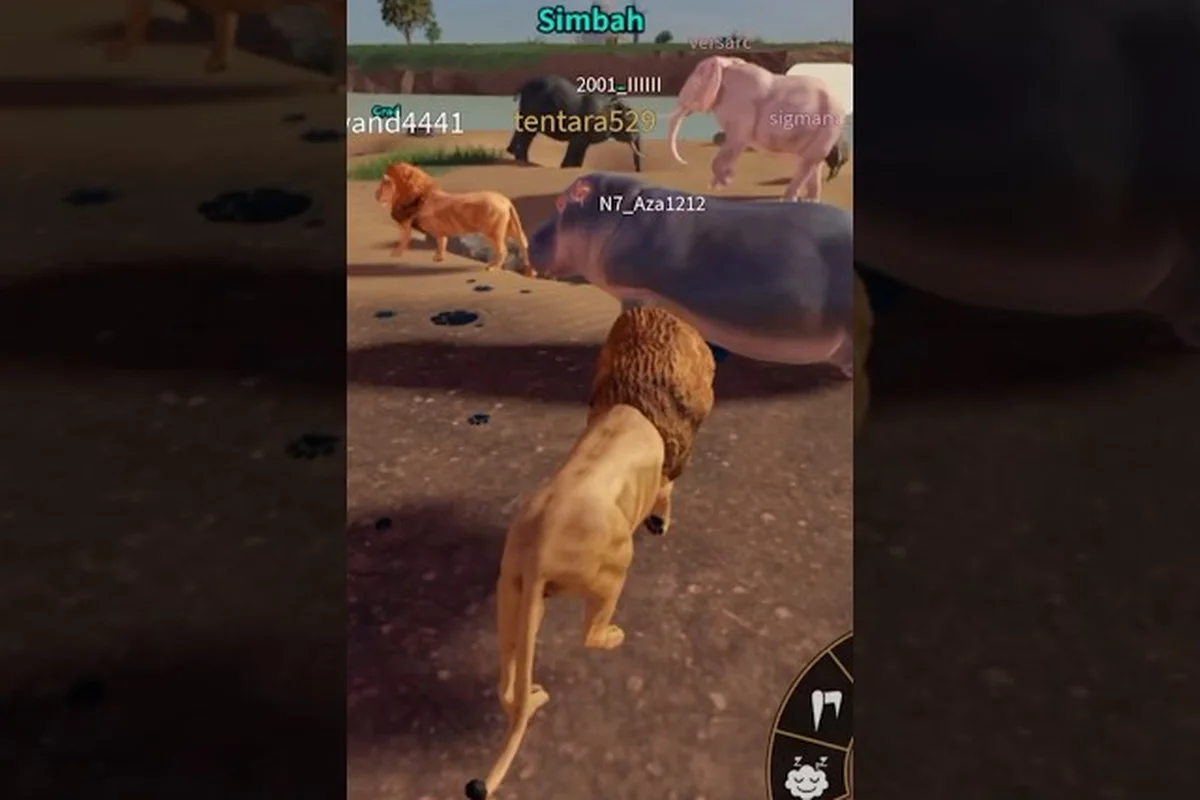
Savannah Life is a Roblox animal simulation where the savannah life day and night cycle decides whether you hunt in golden light or hide in pitch-dark grass from ambush predators. Every in-game minute maps onto a real-time rotation of sun, moon, and weather, and each phase flips the rules for stamina, hunger, thirst, and which creatures hold the top of the food chain. Knowing that cycle is the difference between a confident pride leader and a fresh carcass on the savannah floor.
How the Savannah Life Day and Night Cycle Works
The savannah life day and night cycle is a server-shared clock that runs continuously, swapping sky color, ambient sound, predator AI, and spawn rates on fixed timers. According to the game's official Roblox page, the game is built around 21+ playable species, hunger and thirst bars driven by R to eat and Q to drink, and a survival loop that escalates dramatically once the sun drops.
Daylight Phases (Dawn, Midday, Golden Hour)
Daylight is split into three practical phases that most players treat as separate "shifts." Dawn runs roughly the first 20% of a cycle and gives herbivores their safest travel window because lions, leopards, hyenas, and crocodiles spawn with reduced aggression. Midday stretches across the middle 40%, bringing the hottest temperatures and fastest stamina drain; herbivores cluster around water holes, which makes midday the prime window for solo predator players to scout a hunt. Golden Hour is the final stretch before nightfall, with low light, long shadows, and increasingly confident predator behavior.
| Phase | Light Quality | Predator Aggression | Best Activity |
|---|---|---|---|
| Dawn | Soft, low contrast | Low | Long-distance travel, drinking at exposed water |
| Midday | Bright, harsh | Medium | Solo hunting near water, NPC prey runs |
| Golden Hour | Warm, dim | High | Stalking, scouting herds, setting up ambushes |
Night Phases (Dusk, Deep Night, Pre-Dawn)
Dusk is the transition window where the savannah life day and night cycle really starts to hurt new players. Predators gain cover bonuses, herbivores instinctively group tighter, and visibility drops to roughly 30% of daylight range, based on community testing reported in the Savannah Life Fandom guides. Deep Night is the longest and darkest phase, and it is when the Blood Moon event triggers on certain server rotations. Pre-Dawn offers a brief reprieve before the cycle resets, but stamina, hunger, and thirst are at their worst because food and water access has been limited for the full night.
| Phase | Light Quality | Predator Aggression | Player Priority |
|---|---|---|---|
| Dusk | Fading, warm | Rising | Find a den, herd, or water buffer |
| Deep Night | Near-total dark | Maximum (Blood Moon possible) | Survival, not hunting |
| Pre-Dawn | Hazy, blue | Medium-high | Eat, drink, move to safe zone |
Cycle Length and Real-Time Mapping
Each full savannah life day and night cycle takes about 20 real-time minutes in a standard server, according to community data cross-referenced with the NOYO Productions official site. That is roughly six minutes of usable daylight, ten minutes of night, and short transition windows. A player who wants the Day Survivor badge or Night Survivor badge has to stay alive for a complete cycle, which means planning food, water, and a safe position before the clock flips.
Surviving the Night: Savannah Life Night Survival Fundamentals
Savannah life night survival is built on three pillars: stay fed, stay hydrated, and stay near cover. A new player who enters nightfall at full hunger and thirst almost never makes it to dawn, because night reduces safe food and water spawns and forces confrontation with predators that have been waiting for this exact rotation.
Hunger, Thirst, and Stamina Drain at Night
Hunger and thirst decay roughly 30% faster at night than during midday, based on community-reported testing on the Savannah Life Wiki guides. Stamina regeneration is also slower, which means a fleeing herbivore will run out of sprint before reaching a den. Players should aim to be at full bars when dusk hits, then top up again at the pre-dawn window before any fighting.
Safe Spots and Dens
The savannah life day and night cycle rewards map knowledge. Dens and burrow systems scattered across the map give herbivores a 40-60% damage reduction against predator attacks when used correctly, according to player experience shared on community guides. A safe spot checklist for night looks like this:
-
Underground dens near acacia groves (best for rabbits, meerkats, and small herbivores)
-
Water hole centers for hippo-class species (high crowd density, predator players hesitate to dive in)
-
Herd centers for zebra, wildebeest, and antelope classes (group passive reduces solo predator success rate)
-
Rocky outcrops for large carnivores defending territory from rival predators
Predator players running the night have a different checklist. Instead of dens, they use elevated rocks, tall grass, and the edges of water holes to pick off weakened stragglers. The savannah life day and night cycle essentially hands the map to predators between dusk and pre-dawn, which is why predator players plan their stamina around timed ambushes rather than extended chases.
The Blood Moon Event: Savannah Life Blood Moon Mechanics
The savannah life blood moon is the most dangerous state the server can enter, and it is the headline reason players study the savannah life day and night cycle in detail. According to the Savannah Life official page on Roblox, the blood moon event is part of the server event system that also includes thunderstorms and lightning strikes.
What Triggers the Blood Moon
The savannah life blood moon event does not run every night. Community testing reported on the Savannah Life Fandom guides suggests the event triggers roughly once every 3-5 server cycles, often at the start of a Deep Night phase. When it fires, the skybox turns a deep crimson, ambient sounds shift to lower predator growls, and every carnivore on the map receives a temporary damage and speed buff. Herbivore respawns slow down, which means dying during a blood moon window is punishingly permanent.
Blood Moon Badge Requirements
The savannah life blood moon badge is awarded for surviving a full blood moon event without dying. Based on community reports, the requirements break down into three tracked conditions:
| Condition | Requirement | Failure Consequence |
|---|---|---|
| Survival | Stay alive for the full event duration | Badge does not progress |
| Presence | Be on the server when the event starts | Cannot retroactively earn the badge |
| Species | Any playable species qualifies | None — all 21+ species are eligible |
Players who want the badge should not attempt a hero play during a blood moon. The savannah life day and night cycle is brutal enough on a normal night; doubling predator damage and speed on top of darkness makes offensive moves almost always fatal for new players. The safer play is to bunker in a den, herd, or water hole and let the timer expire.
Blood Moon Strategy by Species Class
Savannah life blood moon runs differently depending on which species you play. A lion or hyena can lean into the buff and hunt aggressively, because the damage and speed bonuses offset the increased herbivore grouping. A zebra, antelope, or gazelle should never go solo; the buff is large enough that a single predator will down most small herbivores in two hits. A hippo or rhino has the natural tank stats to ride out the entire event near a water source without much input. A crocodile, finally, should stay in or near water, where the blood moon's predator buff stacks with the natural water-cover bonus.
Weather Events and Storms in Savannah Life
Savannah life weather events are the second major timer-driven system layered on top of the savannah life day and night cycle. They include thunderstorms, lightning strikes, sandstorms, and heat waves, and they each interact with the time-of-day system in slightly different ways. The NOYO Productions community page describes weather and time-of-day as paired systems that keep each server rotation unpredictable.
Thunderstorms and Lightning
Thunderstorms are the most lethal weather event in Savannah Life. Lightning strikes the highest point on the map in a small radius, which means a tall herbivore standing on open ground during a storm has a real chance of being one-shot. Storms reduce visibility further than night alone and force both predators and prey to break off fights. The Thunder Struck badge and Storm Survivor badge both tie into this system, and players chasing the savannah life blood moon badge should still avoid open ground during a thunderstorm even if the moon event is not active.
| Weather Event | Effect on Players | Effect on Predators | Counter |
|---|---|---|---|
| Thunderstorm | Lightning one-shot risk on open ground | Reduced aggression | Move under acacia cover or into dens |
| Sandstorm | Visibility drop, stamina drain | Track by scent, not sight | Cluster in herd, drink water |
| Heat Wave | Fastest stamina drain of any phase | Predators slow slightly | Stay near water, rest in shade |
| Heavy Rain | Drink gauge fills passively | Reduced predator AI | Travel freely, top off water |
Sandstorms and Heat Waves
Sandstorms tend to fire during midday, while heat waves chain off golden hour. Both are minor compared to thunderstorms but matter for stamina management. A herbivore caught in a sandstorm will burn through stamina trying to find the herd, which makes them an easy target once the storm clears. A predator running a heat wave loses roughly 15% of their attack damage output based on community data, which is one of the few times the savannah life day and night cycle gives herbivores a defensive edge.
Players who want a complete picture of how all these events chain into badge progression should look at a broader Savannah Life badge breakdown, because the day, night, storm, and blood moon badges are tracked as a connected set by the server.
Hunting, Herd Tactics, and the Best Time to Hunt
Savannah life how to hunt depends entirely on which species you play and which slot of the savannah life day and night cycle you spawn into. Predator players and herbivore players have opposite ideal windows, and the savannah life how to hunt meta shifts every few weeks as the developer tunes spawn rates.
Daytime Hunting Windows
The savannah life how to hunt strategy for predators is built around three daytime windows. Dawn lets a fresh predator scout herds without immediate retaliation, midday gives the cleanest shot at lone herbivores near water, and golden hour is when predator players push hardest because night is about to flip the tables. A predator that ignores the cycle and tries to force fights during deep night is leaving efficiency on the table, especially when a blood moon is not active.
| Predator Class | Ideal Hunting Time | Prey Target | Success Driver |
|---|---|---|---|
| Lion | Midday to Golden Hour | Wildebeest, zebra | Pride stacking for group damage |
| Hyena | Dusk to Deep Night | Lone stragglers | Pack numbers and stamina pressure |
| Leopard | Dawn and Dusk | Small herbivores | Stealth bonus in low light |
| Crocodile | Midday (at water) | Drinking herbivores | Ambush from water cover |
Herbivore Survival and Counter-Hunting
Herbivores in Savannah Life do not hunt, but they absolutely counter-hunt. A coordinated zebra or wildebeest herd can use the group passive to kill an overconfident solo predator player during a blood moon, and the savannah life how to hunt meta for herbivores is really about counter-ambush timing. The best counter-hunt window is pre-dawn, when predator stamina is depleted and a few well-timed charges will scatter a small pack.
A good starting point for players learning the basics of species selection, hunger and thirst management, and pride/pack/herd formation is the Savannah Life beginner guide, which covers the controls and growth systems that every time-of-day strategy is built on top of.
Species Matchups and the Best Time of Day
The savannah life day and night cycle rewards players who match their species to the right phase. Small herbivores should treat dawn as their travel slot, midday as their hide slot, and night as their survival slot. Large carnivores should treat midday as their hunting slot and night as their blood moon slot when the event is active. Mid-tier omnivores like jackals and badgers have the most flexibility because their damage is consistent across phases, but they also have the lowest burst damage ceiling.
| Species Class | Strongest Phase | Weakest Phase | Night Strategy |
|---|---|---|---|
| Small herbivore | Dawn, Midday | Deep Night, Blood Moon | Hide in den, eat early |
| Large herbivore | Midday, Golden Hour | Blood Moon | Stand ground near herd |
| Apex predator | Midday to Golden Hour | Heat Wave, Sandstorm | Hunt aggressively on Blood Moon |
| Mid-tier omnivore | Any non-storm phase | Thunderstorm | Scout, opportunistically strike |
Frequently Asked Questions
How long is a full day and night cycle in Savannah Life?
A complete savannah life day and night cycle takes about 20 real-time minutes in a standard server, with roughly six minutes of usable daylight, ten minutes of night, and short transition windows. This figure is based on community testing cross-referenced with the developer's official site, and exact timing can shift slightly with patches.
How do I earn the blood moon badge in Savannah Life?
You need to be on the server when the savannah life blood moon event starts and stay alive for the full event duration without dying. The badge does not require a specific species, but small herbivores and solo predators have the lowest success rate because of the predator damage and speed buff applied during the event.
What is the safest way to survive the night in Savannah Life?
Savannah life night survival comes down to three habits: enter dusk at full hunger and thirst, position inside a den, herd, or water hole before the deep night phase, and avoid all open ground during thunderstorms. A player who is fed, hydrated, and sheltered at dusk almost always makes it to pre-dawn.
Do weather events stack with the blood moon in Savannah Life?
Yes, weather events can overlap with the savannah life blood moon event, and the combination is the most lethal state in the game. Lightning strikes during a blood moon thunderstorm will one-shot tall herbivores on open ground, while predator players gain both the blood moon buff and the storm-driven visibility drop. Treat the overlap as a hard survival phase rather than a hunting phase.
Is hunting at night worth it without a blood moon active?
For most predator classes, no. The savannah life day and night cycle gives herbivores grouping bonuses and predator AI a smaller sight range, which lowers solo kill rates outside a blood moon window. The exception is leopard-class predators, whose stealth bonus offsets the visibility loss, and coordinated pride or pack stacks, which can burst down a herd even on a normal night.