
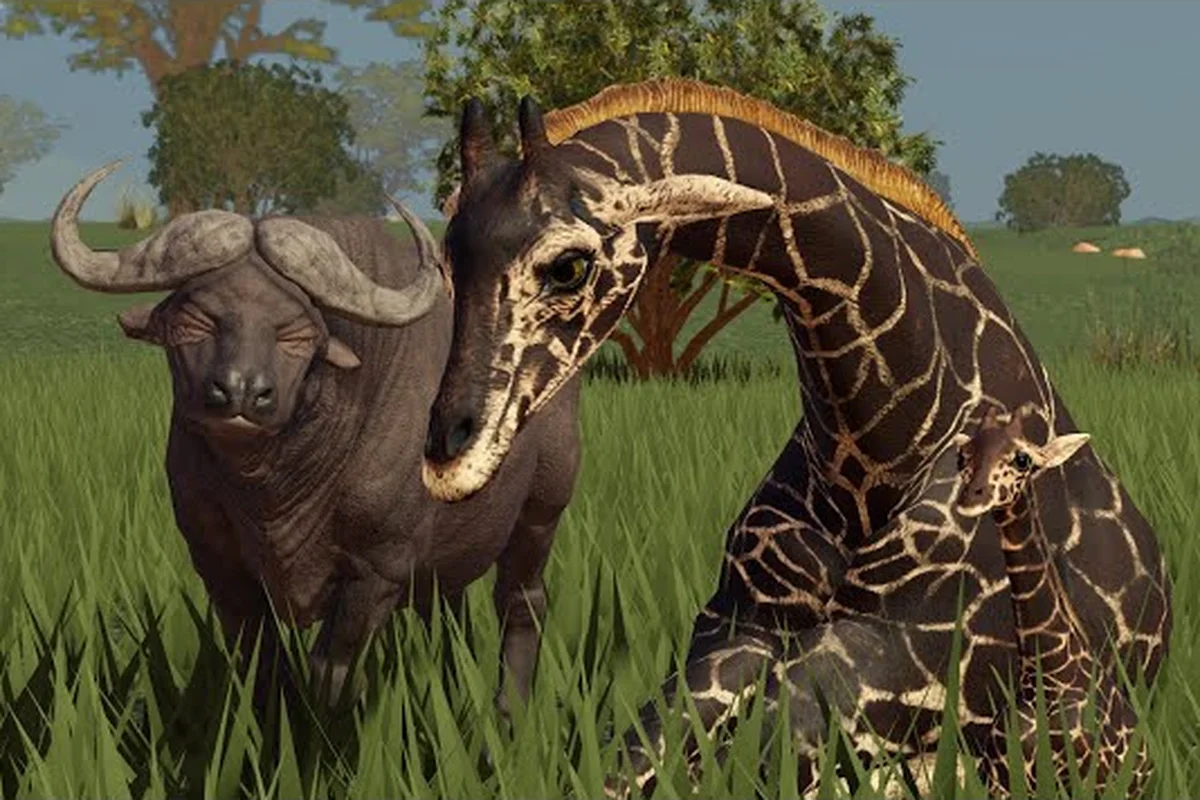
A good savannah life map guide turns the first confusing hour on the server into a confident walk through every zone. The Roblox survival sim drops players into a sprawling grassland split between predator territory, herd animal meadows, and river corridors lined with Simba Falls rapids, so knowing where to drink, where to den, and where the crocodiles patrol separates a long-lived family from a short, thirsty run.
The savannah itself is divided into roughly thirteen named regions. Each one carries its own resource density, predator traffic, and shelter value, which is why experienced players treat the savannah life all locations list as a checklist before they ever leave the central watering hole. This guide walks through every region in order, flags the safest drinking spots, marks the savannah life den locations that cubs and lioness families rely on, and warns where the savannah life river crocodiles control the banks.
Understanding the Savannah Life Map Layout
The savannah life map guide starts with one core idea: the world is a rough ring. A long, curving river runs along the southern edge, dry grasslands and rocky outcrops fill the middle, and a denser forest band hugs the north. The community-driven map tours that float around TikTok and YouTube all name the same thirteen zones — Simba Falls, Savannah, Nyala, Heights, Mirage, Forest, Pride, River, Hippo Rock, Bend, Swamp, Sablerock, and Sabie — and they sit on the ring in roughly that order when read clockwise.
The official store page on Roblox describes the game as a survival simulator where new animals spawn near the main watering hole or central gathering areas, and that single detail explains the entire map design. The junction zones (where paths meet) are intentionally the safest places to land, while the stretches between junctions are where predators push lone herbivores. According to the Savannah Life page on Roblox, those central gathering areas also respawn prey the fastest, which is why most new players migrate outward only after their first drink.
Reading the Map at a Glance
Every region has three traits worth memorizing before you move in: the dominant prey, the dominant predator, and the safest cover type. The table below condenses community data and the official Savannah Life page on NOYO Productions into a quick reference.
| Region | Dominant Prey | Dominant Predator | Best Cover |
|---|---|---|---|
| Simba Falls | None (drinking zone) | Crocodile | Rock ledges above the falls |
| Savannah | Gazelle, wildebeest | Lion, hyena | Tall grass patches |
| Nyala | Nyala antelope | Leopard | Acacia clusters |
| Heights | Klipspringer | Eagle, leopard | Rocky cliffs |
| Mirage | Springbok | Lion, cheetah | Sparse bushes, mirage illusions |
| Forest | Bushbuck | Leopard, snake | Dense canopy |
| Pride | Cub spawn | Lion pride | Pride rock overhangs |
| River | Wading birds | Crocodile, hippo | Riverbank reeds |
| Hippo Rock | None | Hippo, crocodile | Elevated boulders |
| Bend | Mixed herd | Lion, hyena | Riverbend brush |
| Swamp | Reedbuck, warthog | Crocodile, python | Reed beds |
| Sablerock | Porcupine | Leopard, jackal | Rocky crevices |
| Sabie | Sable antelope | Wild dog | Wooded edge |
That table is the spine of every route plan in the rest of the guide. If you are a gazelle, Savannah is your home turf; if you are a leopard cub, the Forest and Nyala border is your hunting ground.
How Junctions, Water, and Cover Connect
The savannah's design rewards players who learn the junctions, because every safe drinking spot sits at the meeting point of at least two regions. The main watering hole sits in the central Savannah zone, which borders Nyala, Pride, and Mirage simultaneously. According to community map tours, secondary drinking spots sit where River meets Bend, where Swamp drains into the southern channel, and at the small Hippo Rock pool that the official store page highlights as a respawn hotspot.
Because every junction is a resource funnel, it is also a predator funnel. A lioness defending cubs will naturally park between the main watering hole and Pride rock, while a crocodile claiming the Simba Falls drop will keep any antelope from drinking at the most obvious source. Reading the map is therefore a matter of reading the pressure around each junction, not just the grass color.
Savannah Life Map Areas and Their Resources
Open grazing zones reward fast, low-stamina herbivores that can outrun midday predators and migrate between scattered savannah life water sources as surface pools dry up, while river corridors concentrate activity around permanent drinking holes, attracting crocodiles and forcing prey to time crossings at dawn. Rocky shelter pockets stay cooler overnight, so ambush predators and small den-dwelling species favor them, creating a daily rotation where each savannah life map area peaks in density at a different hour.
Open Grazing Zones
Savannah, Nyala, Mirage, and Bend are the wide-open grazing zones. They share long sight lines, scattered acacia cover, and the densest prey populations. Grazers spawn here faster than anywhere else on the map, which makes them the richest hunting grounds for lions, hyenas, and cheetahs. The trade-off is exposure: with tall grass only in patches, a single chase usually ends in the open unless the prey can break toward Forest or Heights cover.
These zones also carry the most variable water access. The main watering hole anchors the central Savannah region, but secondary puddles in Mirage and Bend are unreliable, and predators camp them at dawn when prey herds move. The community map guides frequently flag the Mirage secret hole — a concealed drinking spot tucked behind a low ridge — as a safer alternative for lioness families raising babies, since predators rarely patrol the far side of the ridge.
River Corridors and Water Sources
The savannah life water sources cluster along the southern river, which is a single curving channel rather than a web. From west to east it passes through Simba Falls, River, Hippo Rock, Bend, and Swamp before looping back north. Every stretch of that channel has a different risk profile, and the savannah life watering hole network fans out from it into the grazing zones.
| Water Source | Region | Drink Risk | Best For |
|---|---|---|---|
| Main Watering Hole | Savannah | High predator traffic at dawn | First drink after spawn |
| Simba Falls pool | Simba Falls | Crocodile ambushes | Quick sips, fast exit |
| Riverbank edge | River | Hippo charges | Solo crocodiles, hippo builds |
| Hippo Rock pool | Hippo Rock | Crocodile + hippo overlap | Risky, but high respawn |
| Bend eddy | Bend | Lion ambush from tall grass | Mid-game drinking rotation |
| Swamp shallows | Swamp | Python, crocodile | Endgame only |
Players who treat water as a planned stop rather than a reflex survive far longer on the savannah life map, because the southern river channel is the single most dangerous corridor linking Simba Falls, Hippo Rock, Bend, and Swamp, and a reflex-driven drink almost always lands you inside a crocodile ambush, hippo charge, or lion pounce from the adjacent tall grass. Treat each water source the way the table above ranks them: rotate timing (dawn vs midday) to match the listed predator window, never linger at the Riverbank edge or Bend eddy, and pair the drink with a savannah life den check nearby so a forced respawn route is already mapped.
Rocky Shelter and Forest Edges
Heights, Forest, Pride, Sablerock, and Sabie form the shelter ring. These zones offer the densest cover, the safest den sites, and the slowest prey respawn. Predators still patrol them, but they lose the speed advantage of open ground, and most herbivores can break line of sight long enough to reach a den.
The savannah life den locations sit almost entirely inside this ring. Lion prides anchor at Pride rock, leopard families dens in the Forest canopy, and small scavenger families claim rock crevices in Sablerock and Sabie. Because dens are static, every predator on the server learns their general position within the first ten minutes, which is why experienced players rotate their cubs between two or three dens across a single play session.
Savannah Life Watering Holes and Safe Drinking Routes
The savannah life watering hole network looks generous on paper — six named drinking spots spread across the map — but only three of them are realistic first-day destinations. The main watering hole, the Bend eddy, and the Mirage secret hole are the three sources that community testing consistently ranks as the safest.
Main Watering Hole Traffic Patterns
The main watering hole in the central Savannah region is where the official store page confirms new animals spawn. It is also the most heavily contested source of water on the map, because it borders three grazing zones and one pride territory. The community data points to a repeating pattern: dawn brings the heaviest predator traffic, mid-morning thins out, midday is the calmest window, and dusk brings a second surge as predators head back to their dens.
The practical move is to arrive mid-morning, drink once, and rotate immediately toward either Mirage or Bend for a second drink. A solo player who lingers at the main watering hole past the noon lull almost always runs into a pride that has been waiting for late arrivers. Players who want to extend their first safe hour should treat the main watering hole as a refuel stop, not a base camp.
Secondary Drinking Spots and Their Triggers
The Bend eddy sits where the river curves back toward the central savannah, and the tall grass on its banks makes it a classic ambush site. According to community map tours, lions and hyenas use the grass exactly the way real predators do — they wait at the curve where prey must slow down to enter the water. The counter is to approach from the rock side, drink quickly, and never enter the water itself.
The Mirage secret hole is the opposite. It is small, hidden, and rarely visited, which makes it the best fallback source once the main watering hole becomes too hot. The trade-off is that the surrounding Mirage region has sparse cover, so reaching the secret hole requires a long, exposed run from the Savannah or Nyala edge.
| Drinking Spot | Traffic Risk | Predator Type | Best Approach |
|---|---|---|---|
| Main Watering Hole | Very high at dawn/dusk | Lion pride, hyena pack | Mid-morning, single drink |
| Bend eddy | High at all hours | Lion, hyena | From rock side, no wading |
| Mirage secret hole | Low | Occasional leopard | From Nyala edge, fast retreat |
| Simba Falls pool | Extreme | Crocodile | Avoid except crocodile builds |
| Hippo Rock pool | High | Hippo, crocodile | Only on hippo/crocodile builds |
| Swamp shallows | High | Python, crocodile | Endgame predator builds |
Drinking Rotation Example
A typical safe rotation on a new server looks like this: spawn at the main watering hole, drink once, run east into Bend for a second drink before the pride returns, then loop north through Nyala to Mirage for a third drink at the secret hole. The full loop takes roughly five to seven minutes, and by the end of it the player has mapped the server's predator pressure for the rest of the session.
Savannah Life River Crocodile Zones and Predator Pressure
The savannah life river crocodiles control the entire southern corridor, and the savannah life river crocodiles density peaks around Simba Falls and Swamp. Crocodiles are ambush predators in the game the same way they are in real life, and the river is built to reward that playstyle. The banks have tall reeds, the water has low visibility, and most drinking approaches force prey to walk into the kill zone.
Crocodile Territory Map
Crocodile pressure is not uniform along the river, and treating the whole waterway as equally dangerous is a mistake that kills cautious herbivores first. The map below breaks the river into its five named stretches and shows where the worst ambushes sit — a pattern that holds across most public Savannah Life servers because spawn weighting favors the slow-moving pools at Simba Falls and the reed-choked Swamp endpoints, while the central Bend stretch and River midpoint stay comparatively breathable if you keep moving.
| River Stretch | Crocodile Density | Entry Risk | Notable Hazard |
|---|---|---|---|
| Simba Falls | Very high | Falling water masks sound | Crocodile below the falls |
| River (central) | Moderate | Hippo overlap | Hippo charges from shallows |
| Hippo Rock | High | Dual predator | Crocodile and hippo share pool |
| Bend | Low to moderate | Tall grass cover | Lion ambush from banks |
| Swamp | Very high | Reed beds hide approach | Python ambushes from reeds |
Players who plan to play herbivores should treat the entire river as hostile until they have personally mapped the server's crocodile spawns. The community-driven TikTok map tours consistently warn that crocodiles respawn faster than any other predator, which means clearing the river once does not keep it clear for long.
Why the Southern Corridor Matters
The river is not just a hazard. It is also the only reliable water source during the dry season, and the savannah life watering hole network depends on tributaries that flow down from the central savannah into the river. Predators understand this, which is why they concentrate along the riverbanks in the late afternoon, when thirsty prey have to choose between drinking and starving.
A common counter is to drink at the main watering hole in the morning and skip the river entirely until dusk. The community map guides call this the two-drink rule: two drinks from the main watering hole are safer than a single drink from any river source, unless the player is running a crocodile or hippo build that benefits from the river's prey traffic.
Players who want a deeper breakdown of crocodile spawn points and how to read their patrol patterns can pair this guide with the broader crocodile spawn locations overview to plan a full server rotation.
Savannah Life Den Locations and Shelter Strategy
The savannah life den locations fall into four tiers based on how reliably they hold cubs and family members overnight. Choosing the right den at the right moment is the difference between a family that survives to adulthood and one that gets wiped during a night raid.
Den Tier List
| Den Type | Region | Predator Threat | Best For |
|---|---|---|---|
| Pride rock overhang | Pride | Lion pride raids | Established prides |
| Forest canopy | Forest | Leopard, snake | Leopard and bird builds |
| Sablerock crevice | Sablerock | Jackal, leopard | Small scavenger families |
| Sabie wooded edge | Sabie | Wild dog, leopard | Medium herbivore families |
| Heights cliff | Heights | Eagle, leopard | Solo climbers, klipspringer |
| Mirage ridge hole | Mirage | Occasional lion | Lioness families with cubs |
| Swamp reed bed | Swamp | Python, crocodile | Apex predator families |
The Pride rock overhang is the most famous den, but it is also the most raided. Experienced pride players rotate between Pride rock and the Mirage ridge hole that the Facebook community tips highlight as a favored cub-rearing spot, because predators rarely check the far side of the ridge.
Den Rotation Strategy
A den rotation works because every predator on the server learns fixed den positions over the first day. The counter is to never sleep in the same den twice in a row. The community data shows that prides which rotate between Pride rock, the Mirage ridge, and the Heights cliff survive roughly twice as many nights as prides that anchor in a single den.
Cubs are the most vulnerable during the rotation, because they move slowly. The standard approach is to carry cubs to the new den just before dusk, when predators are returning to their own dens and the grass is thick enough to mask movement. Once the cubs are settled, the adults split up: one patrols the den entrance, the other runs a drinking rotation through the savannah life watering hole network.
Players who want to extend their survival past the first few nights can pair den rotation with broader survival mechanics for new players, since hunger and thirst drive most of the risky moves that lead to cub loss.
Reading Predator Pressure and Planning Crossings
Reading predator pressure tells you where the dangers cluster, but timing your movement across the savannah life map is just as critical — a pride defends its den locations aggressively at dawn, crocodile zones around the river shift visibility after midday, and pythons ambush near narrow water sources where the terrain funnels prey, so pairing the predator overlay with an in-game time-of-day cue turns a static savannah life map guide into a survival schedule.
Day-Night Pressure Map
| Time of Day | Open Grazing Risk | River Risk | Shelter Risk |
|---|---|---|---|
| Dawn | Very high | Moderate | Low |
| Mid-morning | High | High | Low |
| Midday | Moderate | High | Low |
| Dusk | High | High | Low |
| Night | Low | Low | Very high |
The pattern is consistent across community testing: open grazing is most dangerous at dawn and dusk, the river is dangerous all day, and the shelter ring is most dangerous at night when ambush predators leave their dens to hunt. The counter is to stay in the shelter ring at night, drink at the main watering hole in mid-morning, and reserve the river for endgame builds that can fight back.
Crossing Routes Between Regions
Five crossings connect the major zones. The Savannah to Nyala crossing is the safest, because it runs through scattered acacia cover and ends near a secondary drinking spot. The Nyala to Forest crossing is the riskiest, because the leopards that hunt bushbuck patrol the canopy edge.
| Crossing | Risk | Best Time | Backup Route |
|---|---|---|---|
| Savannah ↔ Nyala | Low | Any time | Direct line through acacia |
| Savannah ↔ Pride | Moderate | Midday | Loop through Mirage |
| Nyala ↔ Forest | High | Night (leopards sleep) | Long loop via Heights |
| Heights ↔ Mirage | Moderate | Midday | Climb down south face |
| Bend ↔ Swamp | High | Any time | Avoid unless on predator build |
The Bend to Swamp crossing is the most dangerous, because both savannah life river crocodiles and swamp pythons share the kill zone. Players on herbivore builds should never attempt it without a clear sight line and an escape plan into Sabie.
Putting the Savannah Life Map Guide to Work
A complete savannah life map guide is more than a list of regions. It is a decision tree: where to spawn, when to drink, which den to claim, and when to rotate. The first hour should be spent at the main watering hole learning the server's rhythm. The second hour should be spent mapping the three safe drinking sources and the two safest dens. The third hour is when the savannah life map areas start to feel like home rather than a maze.
The deeper value of the savannah life all locations list is that it turns random survival into planned survival. Once a player knows that the main watering hole is busiest at dawn, that Bend is an ambush trap, and that the Mirage secret hole is the cleanest fallback, every decision becomes faster. The map stops being a threat and becomes a tool, and that is the point of a proper savannah life map guide.
Players who want to push further into predator or pride play can extend this foundation with a closer look at territory and food locations across the map, since territory control is what separates a casual pride from a server-dominant one.
Frequently Asked Questions
Where is the safest watering hole in Savannah Life?
The main watering hole in the central Savannah region is the safest at midday, but the Mirage secret hole is the safest overall because predators rarely patrol the far side of the ridge. For a long session, rotate between the main watering hole in mid-morning, the Bend eddy, and the Mirage secret hole to avoid ambushes.
Where do crocodiles spawn on the Savannah Life map?
Crocodiles spawn most densely along the southern river, especially around Simba Falls and the Swamp shallows. They also share the Hippo Rock pool with hippos, which makes that source a dual-threat zone. According to community testing, crocodiles respawn faster than any other predator, so clearing the river once does not keep it clear for long.
What are the best den locations for new players?
New players should start at Pride rock, the Mirage ridge hole, or the Heights cliff because they sit close to the main watering hole and the central Savannah region. Rotating between these three dens roughly doubles overnight survival compared to anchoring in a single den, according to community data.
How many regions are on the Savannah Life map?
There are thirteen named regions on the savannah life map: Simba Falls, Savannah, Nyala, Heights, Mirage, Forest, Pride, River, Hippo Rock, Bend, Swamp, Sablerock, and Sabie. They form a rough ring around the central watering hole, with open grazing in the middle and rocky shelter along the edges.
Can herbivores cross the southern river safely?
Herbivores can cross the southern river, but only at midday, only at the Bend eddy, and only by approaching from the rock side. The Simba Falls pool, the Hippo Rock pool, and the Swamp shallows are too dangerous for herbivores because crocodiles and pythons control those stretches around the clock.